CAPEL
1
Prayers fledged fluttering hungry to heaven.
Sins numbered, piled up on threadbare Sundays.
Precious is the clear sound of running water in high summer drought.
Clear-throated the hymns from the strong men drunk in praise.
These chapels set dour and grey against the weather God tests them with.
A pungent slow burning peat, this faith of farm work and school mistress.
2
Beyong the roof of human pride
Where Time slows, then stops, then turns to stone
(Mapping out the green bloom, the grey wheel of lichen breath)
Counting down the centuries ’til Eternity
There floats the height of the day and the meat crow dancing:
Poised upon life and death, the line they know so fickle and thin.
3
Drab with the spew of winter and as bitter as Jeremiah
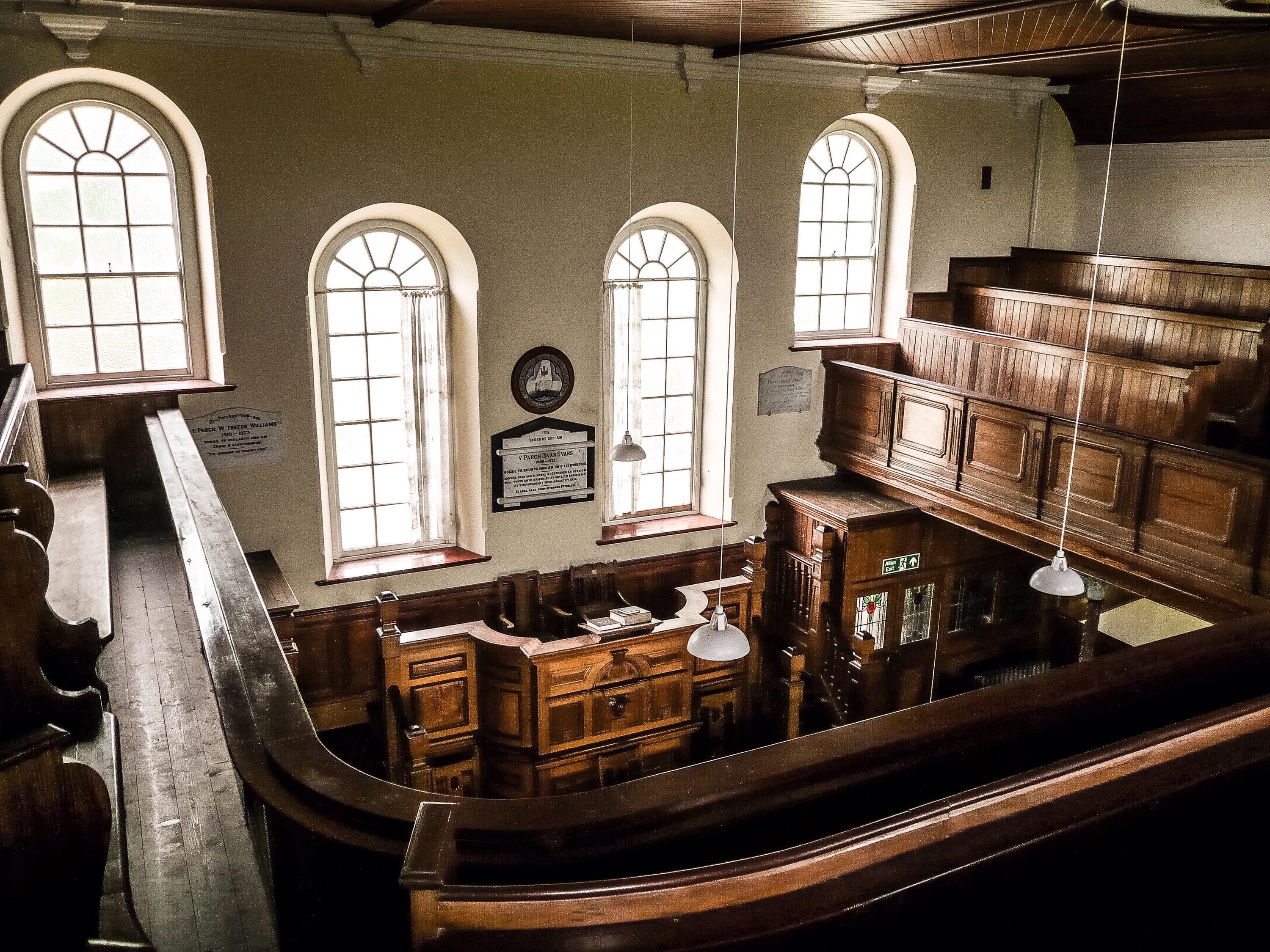
Polished pine slows each musty sunbeam.
Bent arcing benches, each pew a hierarchy strained forward towards the throne,
Concentric jury leaning in to catch spark,
Dazzled is the ignition of the Word.
Burned up in glory or despair
(The cast-iron certainty, the stinging blister of guilt).
Now silence swallowed again, head bowed, the creak of doom summoned.
An enunciated slow pronouncement from other deserts
To a lost people, outnumbered, outmanouvred, dispossessed.
Gather ye in these bleak barns, ye Chosen lost and living yet.
Humbled together, take tea of Christ and God’s new supper.
A thin brew and be thankful for that: there is nothing else.
But better beyond the doors of Time and a hope of warmth and light
And just rewards for a drudge of work in mud and ice and rain,
And a voice of thunder and delight of which the organ sings,
so strong and sweet.

Notes: Wales is full of Non-Conformist Chapels. Every village had one, two, three, barn-like constructions looming over the lanes. Though they are dour and weatherworn now, the ones that have escaped becoming trendy private houses, can be very impressive, with wonderful wooden interiors. The photographs show the interior of our village chapel that originally dates from the 18th century. Gosen Capel is named after the Land of Goshen in the Nile Delta where the Hebrew tribes were settled so as not to upset the urban Egyptians. There is an irony here with the Old Testament histories and the plight of the rural poor of 18th and 19th century Wales. The egalitarian and popular nature of Methodism addressed the general populations in a way that the established churches had no wish to do, as they were supported and run by the educated and Anglicised gentry.
The ‘height of the day’ and the ‘meat crow’ in the second part are literal translations from the Welsh of the names for skylark and raven.
.
 simonhlilly