
Remembering
How many times is it now, this land drained desolate by war?
The straight roads laid out to speed the killers and the already dead.
How they watched the sunlit shields from the heights above Beulah.
How they stood or melted away.
And the wheeling of the ravens and the hungry, circling foxes.
Cold ghosts in white shifts on every stair,
the cough and the chill that will not go.
Poetry is nothing
If not remembering.
As they pass by the curling paths the drovers will make the Welsh girls laugh,
Talking of their yearning for hills and mystery.
The always shaded hollow roads, singing the words of their own language,
Whistling their dogs to move the herds on.
Roads to remembering,
A dark poetry.
And John Dee, whose blood was Welsh,
Followed Giordano Bruno into the Palaces of Memory
From where, perhaps, he learned the distinguishing of angels from demons
And looked into the dark pools of silence and the language of eternity.
His roads were not smooth.
To find a true remembering
is the herding of sheep without boys or dogs.
Wherever we are, it will be a long road home to the place we remember.
Poor Silver John, made bad to scare children,
Lost on the back of night, drowned and lost in bogs.
His eyes, blind sightless moons.
He will never see home again,
All roads turning like eels,
Though the way he is sure he knows…
Memory comes like a summer shower:
Slanting certain rain from a blue sky.
Then in a moment gone and only the reflected puddles left
To join what was with what is.
And who shall there be to recall all the names of the lost?
We, who are now less than this bitter dust.
At our old nation’s heart the blistered blackened tower.
Encompassed by wheels of denial, unnamed, unnumbered.
A concrete void, eyeless, staring at a royal sky.
This tree of burning, falling fruit, shattered and poisoned, discarded,
Rubbed out.
There is nowhere, it seems, not one place, not one vestibule,
Not one chamber in the brain where memory can be found.
It swirls upon us like a holy fog, wrestles us unwilling as an angel on the road,
A ghost on the stairs landing, a voice at dead of night.
We fear we are nothing without it.
Our one purpose: to not forget, to re-infect the future with the past.
A line of names, a road of deeds,
Following the footsteps, fading, fading.
—
Footnotes:
How clear, how obscure should a poem be? It is not an essay, so meaning might be subordinate to sound and image. But nonetheless, meaning should walk the knife edge if a certain stream of thought is being shared. This piece was for the 2017 Llanwrtyd Eisteddfod with a set title of ‘Cofio’ (‘Remembering’) and a maximum of 50 lines. As usual, a month or two was spent mulling over some themes and then I returned to the first that I wrote, making a few small adjustments and changing line lengths to fall within the required length. ( other poems published here this month are also fragments on the same theme).
The words should stand and the sounds should dance. The meaning might come and go, depending on whether the reader recognises the references or not -something upon which the poet has no control, never has, never will. But in our (Welsh/British) tradition, poetry was a means to transmit knowledge, to be mnemonic. To entrance, but also to remind the listener of the vast corpus of traditional information and to create meaningful links between past, present and future.
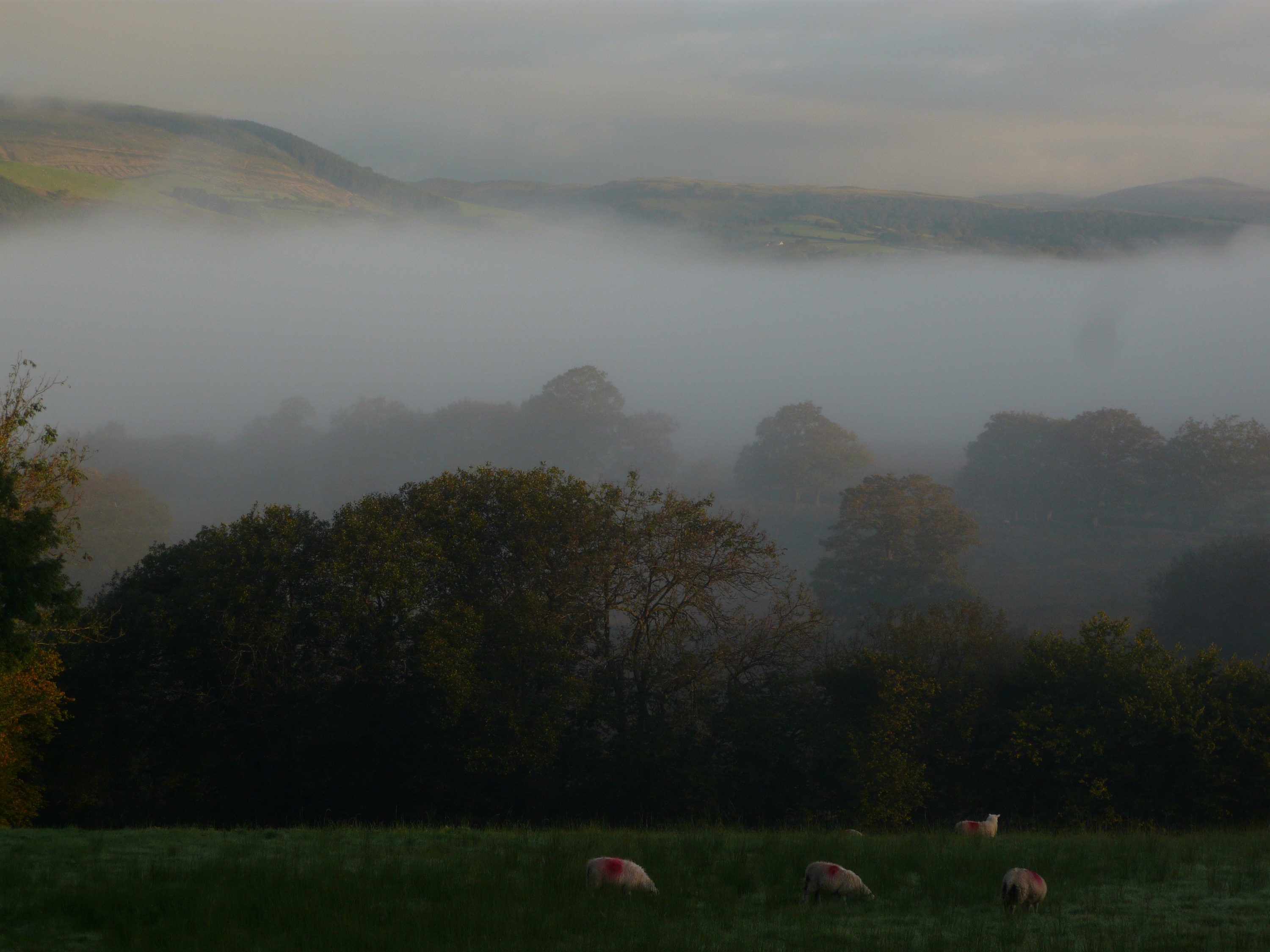
The first verse is located in the Irfon valley where I live and where Llanwrtyd is nestled. It pictures specifically the Roman legions who built roads and forts here to keep watch and subdue the inhabitants, the Ordoviciae. Luckily for the Romans, this Celtic British confederacy of the central uplands of Wales supported the rebellion of the Iceni under Boudicca, thereby justifying a complete and utter genocide of that tribe as retribution ( genocide was one of the Romans favourite means of ‘civilising’, though warring Celtic tribes were not aversed to similar actions). This event is merely a model and prelude to all other armies and rightful rulers emptying this land of its people and resources. The First and Second World Wars continued, indirectly, to the fragmentation of traditional rural communities. Above the village of Bealuh ‘land between heaven and earth’, the ridges of an Iron Age enclosure look down on the valley floor.
Roman roads replaced by the drover’s roads that criss-cross Wales and along which the vast herds of cattle and flocks of sheep were driven into England to the big cities and their markets. If one knows a little Welsh, one knows to be wary of some pronunciations. The drover’s may be talking to the girls about the landscapes they love, or they may be talking about sex and genitalia. ( one of the words for ‘hill’ being very close to the word for ‘sex’, and one of the words for ‘mystery’ also a euphemism for ‘genitals’).
John Dee, the advisor of Queen Elizabeth I, was born in London but his father came from Radnorshire. He was undoubtedly a genius of his age, drawn into the metaphysics of alchemy and the scientific revelations of fervent Protestantism. It is known that he met Giordano Bruno, an Italian metaphysical intellectual who used the ancient Classical mental device of the Memory Palace to hold vast stores of information and near perfect memory recall. Dee conversed with angels, formulated an angelic language, was employed by European monarchs to transmute gold, and was the first to suggest the creation of a ‘British Empire’, based on naval supremacy. He died in poverty with his vast library of books, one of the best in Europe, pilfered and destroyed by neglect and ignorance.
Back in the Radnor hills, a well-respected animal healer, John Lloyd, was murdered one night for his earnings. His body was discovered under the ice of a frozen pool. His memory was used as a way to scare children into good behaviour: “if you are not good, Silver John will come and get you..” and perhaps Robert Louis Stephenson picked up the tale somewhere for his Long John Silver bogeyman.
And then to the current forgotten dead. Three months since the fire in Grenfell Tower, a certain indelible stain on the state of the nation. Evidence scurried away, denials all round, media silence where there should be unremitting howls to reveal all the truth and all the lies. Such a symbol at the centre of the land. The beam in the eye. The burning money tree, the cast away human fruit.
Finally, a wee bit of science and religion. Though there are organs and structures within the brain that need to function correctly to be able to lay down and recall memories, there is no ‘storehouse’, no location in the brain where memories are piled up. Remembering is a whole brain process where pathways and roads of habit are somehow stimulated to recreate a past internal or external event. A passing second reference to angels, messengers of God, who, like memories, insist on being listened to by hook or by crook – as Tobias found out when he was divinely mugged on the road. Paths, roads, incursions, disruption, discomfiture, knowledge, revelation, forgetting. All a web spun out by a freewheeling poetic mind only just under conscious control, in much less time than it took to unravel some of the imagery. ‘Not sure what it all means’. Well, that is the nature of the poetry of the deep mind. And long may it confuse and feed us
—



 simonhlilly
Remembering
September 24, 2017 by simonhlilly
Remembering
How many times is it now, this land drained desolate by war?
The straight roads laid out to speed the killers and the already dead.
How they watched the sunlit shields from the heights above Beulah.
How they stood or melted away.
And the wheeling of the ravens and the hungry, circling foxes.
Cold ghosts in white shifts on every stair,
the cough and the chill that will not go.
Poetry is nothing
If not remembering.
As they pass by the curling paths the drovers will make the Welsh girls laugh,
Talking of their yearning for hills and mystery.
The always shaded hollow roads, singing the words of their own language,
Whistling their dogs to move the herds on.
Roads to remembering,
A dark poetry.
And John Dee, whose blood was Welsh,
Followed Giordano Bruno into the Palaces of Memory
From where, perhaps, he learned the distinguishing of angels from demons
And looked into the dark pools of silence and the language of eternity.
His roads were not smooth.
To find a true remembering
is the herding of sheep without boys or dogs.
Wherever we are, it will be a long road home to the place we remember.
Poor Silver John, made bad to scare children,
Lost on the back of night, drowned and lost in bogs.
His eyes, blind sightless moons.
He will never see home again,
All roads turning like eels,
Though the way he is sure he knows…
Memory comes like a summer shower:
Slanting certain rain from a blue sky.
Then in a moment gone and only the reflected puddles left
To join what was with what is.
And who shall there be to recall all the names of the lost?
We, who are now less than this bitter dust.
At our old nation’s heart the blistered blackened tower.
Encompassed by wheels of denial, unnamed, unnumbered.
A concrete void, eyeless, staring at a royal sky.
This tree of burning, falling fruit, shattered and poisoned, discarded,
Rubbed out.
There is nowhere, it seems, not one place, not one vestibule,
Not one chamber in the brain where memory can be found.
It swirls upon us like a holy fog, wrestles us unwilling as an angel on the road,
A ghost on the stairs landing, a voice at dead of night.
We fear we are nothing without it.
Our one purpose: to not forget, to re-infect the future with the past.
A line of names, a road of deeds,
Following the footsteps, fading, fading.
—
Footnotes:
How clear, how obscure should a poem be? It is not an essay, so meaning might be subordinate to sound and image. But nonetheless, meaning should walk the knife edge if a certain stream of thought is being shared. This piece was for the 2017 Llanwrtyd Eisteddfod with a set title of ‘Cofio’ (‘Remembering’) and a maximum of 50 lines. As usual, a month or two was spent mulling over some themes and then I returned to the first that I wrote, making a few small adjustments and changing line lengths to fall within the required length. ( other poems published here this month are also fragments on the same theme).
The words should stand and the sounds should dance. The meaning might come and go, depending on whether the reader recognises the references or not -something upon which the poet has no control, never has, never will. But in our (Welsh/British) tradition, poetry was a means to transmit knowledge, to be mnemonic. To entrance, but also to remind the listener of the vast corpus of traditional information and to create meaningful links between past, present and future.
The first verse is located in the Irfon valley where I live and where Llanwrtyd is nestled. It pictures specifically the Roman legions who built roads and forts here to keep watch and subdue the inhabitants, the Ordoviciae. Luckily for the Romans, this Celtic British confederacy of the central uplands of Wales supported the rebellion of the Iceni under Boudicca, thereby justifying a complete and utter genocide of that tribe as retribution ( genocide was one of the Romans favourite means of ‘civilising’, though warring Celtic tribes were not aversed to similar actions). This event is merely a model and prelude to all other armies and rightful rulers emptying this land of its people and resources. The First and Second World Wars continued, indirectly, to the fragmentation of traditional rural communities. Above the village of Bealuh ‘land between heaven and earth’, the ridges of an Iron Age enclosure look down on the valley floor.
Roman roads replaced by the drover’s roads that criss-cross Wales and along which the vast herds of cattle and flocks of sheep were driven into England to the big cities and their markets. If one knows a little Welsh, one knows to be wary of some pronunciations. The drover’s may be talking to the girls about the landscapes they love, or they may be talking about sex and genitalia. ( one of the words for ‘hill’ being very close to the word for ‘sex’, and one of the words for ‘mystery’ also a euphemism for ‘genitals’).
John Dee, the advisor of Queen Elizabeth I, was born in London but his father came from Radnorshire. He was undoubtedly a genius of his age, drawn into the metaphysics of alchemy and the scientific revelations of fervent Protestantism. It is known that he met Giordano Bruno, an Italian metaphysical intellectual who used the ancient Classical mental device of the Memory Palace to hold vast stores of information and near perfect memory recall. Dee conversed with angels, formulated an angelic language, was employed by European monarchs to transmute gold, and was the first to suggest the creation of a ‘British Empire’, based on naval supremacy. He died in poverty with his vast library of books, one of the best in Europe, pilfered and destroyed by neglect and ignorance.
Back in the Radnor hills, a well-respected animal healer, John Lloyd, was murdered one night for his earnings. His body was discovered under the ice of a frozen pool. His memory was used as a way to scare children into good behaviour: “if you are not good, Silver John will come and get you..” and perhaps Robert Louis Stephenson picked up the tale somewhere for his Long John Silver bogeyman.
And then to the current forgotten dead. Three months since the fire in Grenfell Tower, a certain indelible stain on the state of the nation. Evidence scurried away, denials all round, media silence where there should be unremitting howls to reveal all the truth and all the lies. Such a symbol at the centre of the land. The beam in the eye. The burning money tree, the cast away human fruit.
Finally, a wee bit of science and religion. Though there are organs and structures within the brain that need to function correctly to be able to lay down and recall memories, there is no ‘storehouse’, no location in the brain where memories are piled up. Remembering is a whole brain process where pathways and roads of habit are somehow stimulated to recreate a past internal or external event. A passing second reference to angels, messengers of God, who, like memories, insist on being listened to by hook or by crook – as Tobias found out when he was divinely mugged on the road. Paths, roads, incursions, disruption, discomfiture, knowledge, revelation, forgetting. All a web spun out by a freewheeling poetic mind only just under conscious control, in much less time than it took to unravel some of the imagery. ‘Not sure what it all means’. Well, that is the nature of the poetry of the deep mind. And long may it confuse and feed us
—
Share this:
Posted in Uncategorized | Tagged art, commentary, deep mind, forgetting, landscspe photography, Llanwrtyd Eisteddfod, memory, Poetry, Welsh landscape | 1 Comment »