LLYM AWEL ( part1)
Llym awel, llum brin
Anhaut caffael clid
Llicrid rid, reuhid llin,
Ry seiw gur ar vn conin.
This long sequence of ancient Welsh verse is named from its first phrase. I was curious to see if I could use some of these words in my artworks. There is a magnetic mystery in words on the horizon of understanding, whether because the language is very old or because it is unknown. Language freed in this way from meaning turns into the music of rhythm and the shape of the mouth. Language is a vessel of sound. Meaning is what fills that shape up in some way. But meaning is not one thing. These gnomic verses, like much ancient poetry, is terse and ambiguous. Translate one way and it carries a completely different mood from translating another way. After all, vocabulary is not meaning. Language builds a picture in the reader/hearer’s mind, and because it is created by another human, it carries its own emotional energy, which may or may not be transmitted whole. Language is translation of a unique experience by and for another. Translation from one language to another first of all loses the implicit rhythms of the original language, and then it often misplaces some of the original emotional intent by a less than perfect matching of word meanings.
‘Llym awel’ seems to be generally translated as ‘sharp wind’, but this itself is a metaphor. Wind does not cut, nor bite, gnaw or pierce. It has no teeth and no sharp edges. The wind, ( if it is wind), is to be perceived through our physical experience. That is what is transferred ( or not) in the meaning. I cannot speak Welsh, neither modern nor Medieval. I have relied in this investigation on accepted academic translations, commentaries and the automatic translations of modern computer programmes. All these provide different viewpoints from whence the original genuine emotional might be unearthed, or else an interesting improvised variation might grow.
Most words have synonyms. Poetry relies often on these to select appropriate metre and rhyme. Bardic Welsh poetry is hugely complex in its internal structure, playing with sounds all the time, following convoluted rules and templates. Translation cannot hope to match any of this well. Poetic commentary and improvised variations may be the best way to approach the feel of the original material, without pretending it translates word for word…..
The first query I came across was the meaning of ‘awel’. My translator insisted on ‘breeze’, giving a completely different word ( in modern Welsh) for ‘wind’. Now the feel and mood of ‘wind’ and ‘breeze’ are very different. So too, ‘llym’ was given as ‘sharp’, ‘ keen’, ‘acute’ – all of related meanings but all with very different emotional energy.
Language relies heavily on habitual idiom and familiar metaphors. We do not question ‘sharp wind’ because we understand that this is not a literal, objective statement. Literal meaning slur and smudge in the creation of a mental picture. By practice we learn to understand when familar phrases mean something rather different. This somewhat complacent use of language is often very different from the meticulous choice of the skilled bard and poet, so it is important not to fall into using the blurred edges of familiar idiomatic phrasing when it can distort or disguise the precise clarity intended by the poet.
We all pass over ‘sharp wind’ very quickly. We get the general drift of meaning, the flavour, but ‘sharp breeze’ makes us pause and reconstruct. It is at once less usual, and a much more particular equation. A breeze is not a buffeting force. It is more akin to an occassional breath. A more harmless movement of air. So when this gentle, slight thing is felt as ‘sharp’ or ‘keen’, then we can automatically readjust the experience. How cold must the air be, for even a slight breeze to cut through to the skin?
So my commentaries and improvisations on these two words were:
Llym awel,
Sharp breeze,
This small stirring drains warmth,
Negates clothing.
Breath breeze makes cold colder.
This breeze breathes ice.

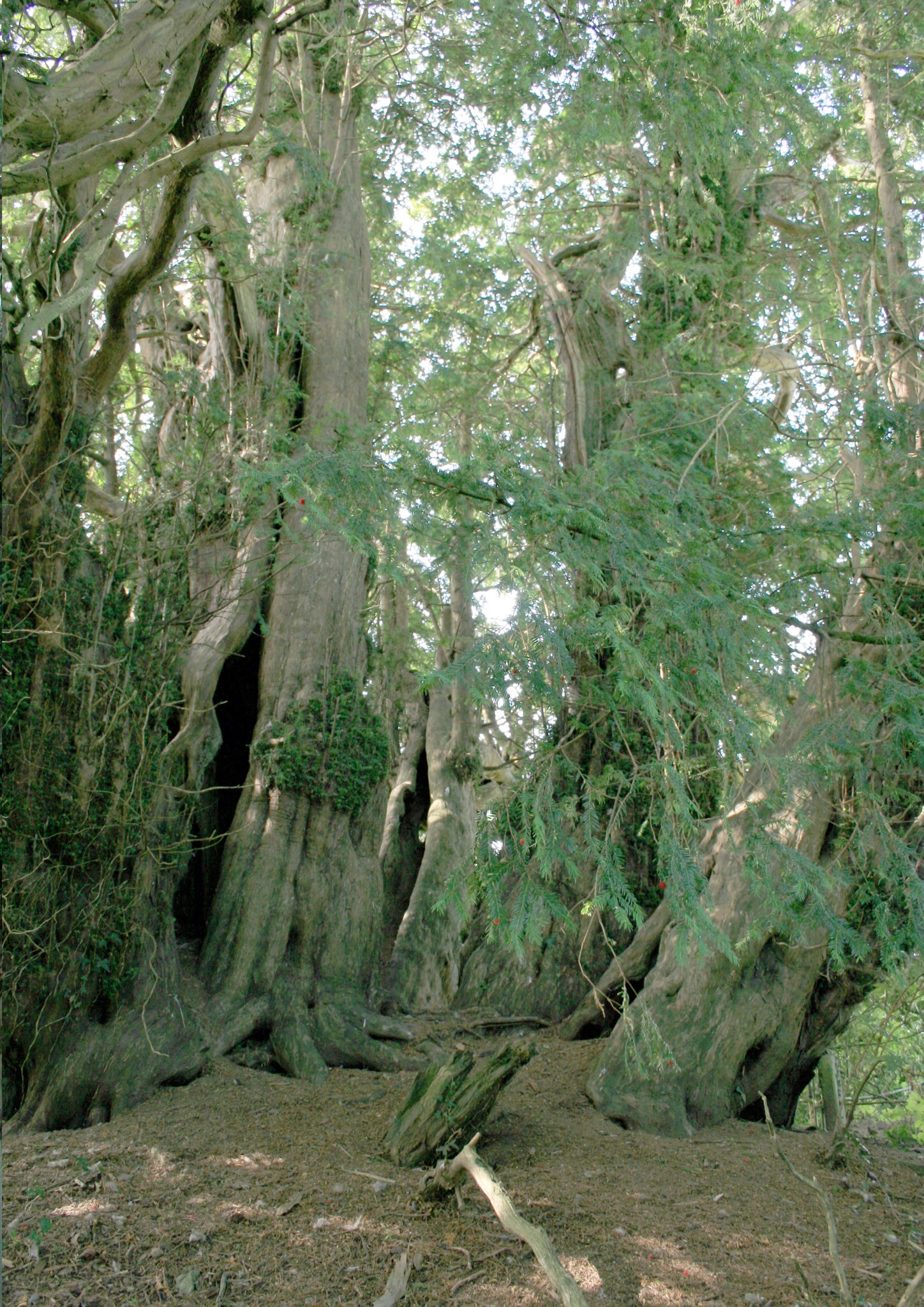


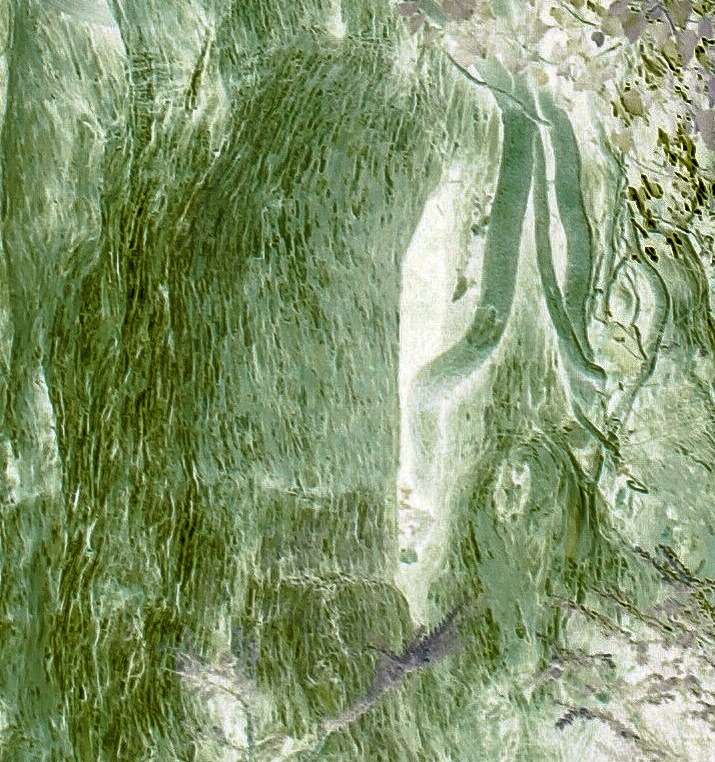


 simonhlilly
LLYM AWEL (part 2)
September 22, 2014 by simonhlilly
LLYM AWEL ( part 2 )
Llym awel, llum brin, anhaut caffael clid;
Llicrid rid, reuhid llin;
Ry seiw gur ar vn conin.
The second phrase is ” llum brin” , “bleak hill”.
Jackson makes it ‘bare the hill’. My iTranslate prefers ‘bleak’.
The choice of synonyms are many and subtly divergent: bare, desolate, hostile, barren, are all covered by ‘bleak’, whereas ‘bare’ seems to me a thinner meaning, and confusable with ‘naked’, thus making the association physically personal, rather than the ferociously and unconcernedly unsympathetic ‘bleak’.
At this stage in the poem the poet has just drawn a landscape and inferred from the adjectives (sharp, bleak) a human presence. The final phrase of the line is ‘anhaut caffael clid’ ‘difficult to find/to obtain/have shelter’, implying he/we are out in this harsh weather.
As this is the case, I wonder whether ‘llum brin’ should be read as ‘this bleak hill’, or ‘bleak hilltop’, because we are not to view it as something out there at a distance, but something here below our feet, all around us, because it is out on the exposed hilltop that we would want to find shelter from the elements.
“Sharp breeze, bleak hilltop, difficult it is to obtain shelter”
There is a contrast in the two halves of the line between the impersonal elemental world, and a small human being moving,uncomfortable, through it. In the Welsh, the first two phrases glide and tumble, compared to the jerking, hesitency of the last three words.
The next line resumes the echoing, reflecting alliteration:
“Llicrid rid, reuhid llin;”
and also returns to observations of the seen world: ‘Llicrid rid’ , Jackson translates as ‘The ford is marred’. There is a sense in ‘llicrid’ of pollution, contamination, become fouled. Presumably the weather conditions have destroyed the gentle, smooth crossing place. I have settled on ‘churned up’ to give that sense of disorder and chaos. This then nicely contrasts with the following phrase: ‘reuhid llin’, lake freezes. Slight variations will give a different taste. Jackson translates this line as ‘ the ford is marred, the lake freezes’, but I feel this distances the experience and makes it rather general, something that happens each winter, not something that is causing an immediate emotional reaction in the poet at this moment, on this journey.
‘The ford is churned up, the lake frozen’
These two phrases contrast each other in the same way that wind/ breeze is active and hilltop is motionless. Here the ford has become wrecked and flooded where it is usually calm, and the gentle rippling lake has become motionless and still.
In Celtic worldviews ( even as a continuation from the Bronze Age) both fords and lakes were sacred as gateways to the Otherworld, liminal places to access the spiritual. Here, they can no longer serve that function – the poet feels even more isolated from the succour of the spirit worlds ( and so giving another meaning to ‘difficult to find shelter’).
The last line is:
‘Ry seiw gur ar vn conin.’
‘Ry seiw’ is “it is (even) possible to stand”, gur/gŵr is ‘a man’, ar is ‘on’, vn/un conin is ‘one stalk/grass/reed’
So: it is possible to stand a man on one reed
It is possible for a man to stand on one reed.
A man might stand on a single reed.
Jackson says: ” A man could stand on a single stalk” , which has a nice quality of flow and wonder to it. To my eye, a ‘stalk’ can be too easily visualised as lying flat on the ground, whereas a reed maintains its sense of verticality, and has a more proverbial sound to it.
Nicola Jacobs’ commentary explains this line as meaning the reed/grass is so frozen, so hard that it can be (theoretically) balanced on. But it also suggests a man made hollow by care and hunger, so light, so worn away and insubstantial, that a reed would not bend under his weight.
The ‘sharp breeze’ of the first phrase is echoed by the sharp, blade-like reed of the last, both summing up the discomfort of the season.
I will mull these ideas and work on my interpretation……
IMPROVISATIONS ON LLYM AWEL
Sharp beeeze, bleak hilltop, difficult it is to obtain shelter.
The ford is churned up, the lake frozen.
A man might stand on a single reed.
Splinter cold, breath stolen.
Pummelled, stripped, this ice wind.
Desolate my road, this dead, domed hill,
Rotted brown and wan.
Shelterless, this way or that,
Remorseless the trudge, and dismal.
Every ford is ice mud,
Churned by all the cattle of the world,
Cast, charnel, sullied, broken.
No joyous lake,
No light waved, rippled,
No meek lap nor song.
All iron ice, white and burning stillness.
Worn hollow by winter,
Wormed and wrought, ringed out.
I wince from every blade of it.
Reeds rattle underfoot.
Pierced, I am lost amongst grasses,
Harsh-throated, severed from home.
—-
Share this:
Posted in Uncategorized | Tagged ancient gnomic verse, commentary, improvisation, landscape, Llym awel, Poetry, translation, Wales, Welsh language, Welsh poetry, Winter | Leave a Comment »