STANDSTILL
Frown-dark hill
Red kite’s raw call
Still valley wood
Snaked silver streams
Low sun shudders.
—
Thin flask shivered:
One day moon
Necklace silver
Cool stream sliced
Bedded deep
Winter night.
—
Posted in Uncategorized, tagged Christmas Eve, Haiku-ish, landscape, moon, Poetry, Solstice, sun, Wales, Winter on December 24, 2014| 2 Comments »
STANDSTILL
Frown-dark hill
Red kite’s raw call
Still valley wood
Snaked silver streams
Low sun shudders.
—
Thin flask shivered:
One day moon
Necklace silver
Cool stream sliced
Bedded deep
Winter night.
—
Posted in Uncategorized, tagged advent, art, Christmas, December, drawing, landscape, monochrome, myth, Nativity, nature, Poetry, Powys, prescience, relief printing, the numinous, Wales, Winter, winter solstice on December 22, 2014| Leave a Comment »
ADVENT
Bran’s tousled head hangs eloquent
From every night-burned alder.
Rust red are the wounded bracken hillsides,
Sour the long sedge.
Steep is the road,
All distance vapour.
Every hedge, a calligraphy of secrets
Taught by italic rains, slanted weather.
The trees stripped to syllables,
Each a sharp tongue and a scourge for empty vastness.
All glory hidden,
Sunk into the small, warm hearts of huddled things.
In barn and byre,
A shuffled silence,
Summer days mulled over,
Scented green against the cold.
Anointed, we are, with slow light,
Awaiting an older cermony:
A star in the east.
A sure opening and a soft, certain closing.
—

Posted in Uncategorized, tagged cosmography, droving paths, fairy roads, green lanes, landscape, mythic landscape, Poetry, the effulgent, the liminal, topography, Wales, Winter on December 19, 2014| 2 Comments »
GLIMMERED PATHS
Beneath those clouds, that dark and glowering sky,
Lie and roll the high hills of home.
Beneath the bracken brown and sedge-sharp hills,
The grey and time-cracked waiting rocks.
Beneath the rocks the slumbered weight, the beds of coal and iron.
The slow seep, the echoed drip that always, always tastes of blood.
Beneath that blood, a fierce and endless joy and sorrow:
Souls and stars, swaying each along their own and glimmered paths.
Beyond the paths, a singing ark of life,
A soaring choir, a cast bell, a cave, a resolute remembering.
There, are turbulent silken seas, all the bones ground down to salt,
Worms turned eloquent: a sudden, unexpected glory.
I dream the drovers turn towards home, tallies marked,
Murmuring their loves, long and low.
Their secret green and hollow ways
Singing light and fireside.
Hard is any parting in winter.
—
Posted in Uncategorized, tagged landscape, Poetry, Powys, Wales, Winter on December 17, 2014| 1 Comment »
December, Towards Solstice.
The silent sky opens upward
Right to the cold edges of space.
The ground sinks into the waters,
Its weight, another’s years folding.
Now is winter’s river:
Flowing fast and deep
Over all, through all,
Between fire and distance.
Hedgerows are neat and black,
Barns stacked full,
Land drains cleared
Of two months rotting leaves.
The long low light of day
Points to shadow’s reach
But cannot quench them.
It slides off hillsides,
Skims deep valleys.
It declines to matter.
—
Posted in Uncategorized, tagged Ancient Welsh poetry, art, black and white, drawing, gnomic verse, improvisations, landscape, Poetry, Wales, Welsh language, Winter, woodblock printing on December 16, 2014| Leave a Comment »

Llym awel 3, improvisations.
The third stanza contrasts the atmospheric tumult of winter with the motionless, perhaps frozen, lake and the lifeless stillness of the remains of vegetation around its shore and in the woods. The complex sounds and rhythms of the first line give way to the stark alliteration and simple rhymes of the second and third lines.
The overwhelming impression is of a stripped hollowness, everything destroyed by the storm. The key is “cold bed” conjuring a flat, unwelcoming expanse of coldness. All the emotion of the narrator is summed up in those two words.
Oer guely, lluch rac brythuch gaeaw;
Crin calew, caun truch;
Kedic awel, coed im bluch.
“Cold bed, the lake in winter’s tumult;
Withered stalk, broken reed;
Violent wind, the trees stripped bare.”
—
For now
It is, surely, a cold cauldron-
This seething winter sky
Within the mute
And broken vessels
Of the earth;
Hollow, rounded,
Iron still.
Held
The grey lake,
The naked wood
Stripped bare
( the suitors of the sky
Voracious for space),
Ripped and opened
To uncaring wild heavens.
—
Cold bed this lake, death-still,
Through winter’s rage;
Withered is the stalk,
Broken the reed;
Violent the wind
That has stripped bare
The trees.
—
Broken withered still the soil,
Still cold the unmoving expanse of lake,
Cold as death.
That which bends is broken,
That which yeilds is bare.
Nothing moves
But winter’s endless roar.
—
Winter’s roar.
All, broken.
Slapped down, the lake,
Cold, folded, comfortless.
Hollow the woods,
Ripped of leaves.
What was, is remains.
Severed, the warmth
Of summer
—
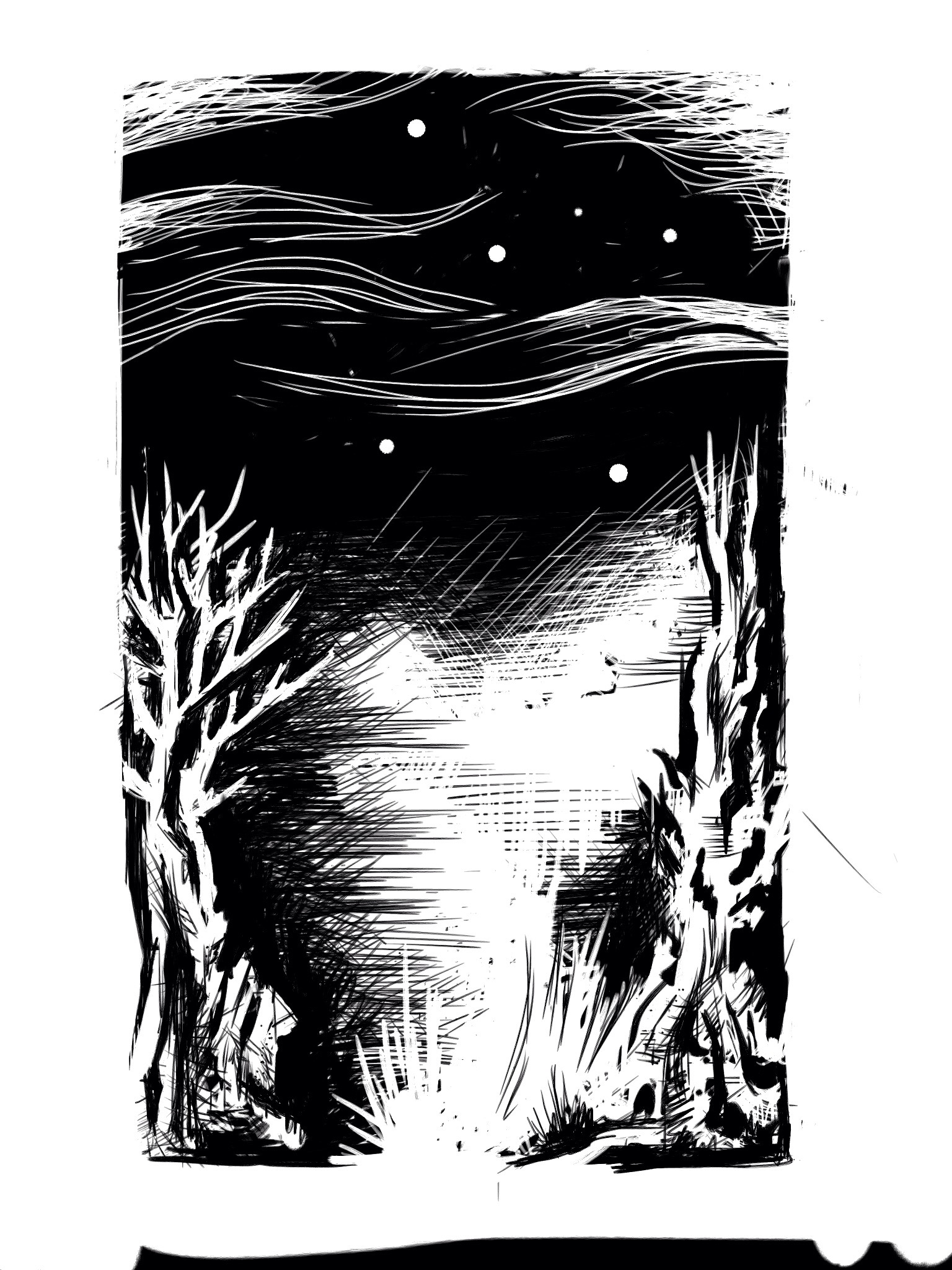
Posted in Uncategorized, tagged cold, December, hill country, impermanence, landscape, mortality, Poetry, Wales, Winter on December 2, 2014| 3 Comments »
In Winter Hills
A shallow
cold stream
of inconvenient air
Is winter in the shaped and cocksure city.
It fills only the void between buildings
And the thin, guttering bones of the homeless.
But a raw six months is winter
In the hills of the northern world.
It builds itself a dance of long-knived layers,
Sucking heat through the ice-spangled drills of starlight,
Peels back and back the year’s green thrust,
Draws out a most echoing hollow certainty
That just one wrong turn, one unlucky day
And this thin, frayed thread shall splay,
Split red and run itself to mud, to ice,
To empty earth, to earth a carcass chord,
A final cold bed,
concluded iron,
sighed
silent
mulch.
—
Posted in Uncategorized, tagged February, fire, hearth, landscape, morning, paths, Poetry, roads, sky crowns, stars, storm, the wanderer, Winter on February 4, 2014| Leave a Comment »
Four pieces from early this morning, ancestral mutters: sky crowns and words from the Anglo-Saxon.
SIGNIFICATOR
The whispers of the stars of dawn,
Rooted in deep paths, seated mind.
Mind that seeks names only,
Seeks genealogies, plumbs down fathoms,
The pitch of rightness.
To themselves they whisper,
Remembering the weave and twist of gold,
The movers in the shadows,
The movers of twilight,
The flickering torchlight,
The muffled, shuffled feet of steady procession,
Of circular dance taking up positions,
Constellations of mirrored geometries
Winding up time before babes yawn,
Before the aches of morning stretch and sigh.
Before the biting cold, the stirring of embered dawn.
Before has passed.
Before has misted away.
The whispered eloquence of now,
A tranquil moment turned and knotted,
A place remembered on a silent road:
Signpost, crossed paths, significator.
—-
FIRE PRAYER
I kneel, cold water,
Before the fire to kindle,
A prayer for light and warmth:
Cold water, flying cloud.
For spark and roaring:
Cold wave, cold tide.
For return of belonging,
For reason to remain.
—-
WANDERER
The lament of the dispossessed –
The long diminishing curlew.
The urgent, soft cries of lovers –
Wild geese, wild geese.
The road is a way but not a home.
The footsteps of others, small consolation
When they have vanished to the horizon,
Gone on before, singing the old song.
Cloud-cloaked wanderer tasting salt.
His children, weighed metre,
The lilt of left and right.
—
ACHE
Raked by claws
(This wolf cold).
Blood stain tumbling
Clear watered pools:
These clouds of squall
In dawn skies.
World’s ribs sigh
And shiver –
The ache
Of onwards.
—
Posted in Uncategorized, tagged before dawn, birds, coincidence, dawn, dawn chorus, expansion into space, frost patterns, landscape, mind, moon, nature, Poetry, silence, Sound, unity, Winter on January 27, 2014| 6 Comments »
DAWN CHORUS AND MOMENTS OF FROST
As if this feather, slow-turning, falls,
One breath of ice, branching blades
Arcing ghosts of fern, arced ghost of forests.
Pinioned cold, eager, aware, edge fractured.
Fingertips feeling for pattern, the familiar
Stretched pale, translucent.
As the scattered, sprinkled pierce of sound,
Woven between moonlit pale dawn wind,
Tumbling, cascades and choirs,
A flurry of beak and breast-soft down.
As all life joined up by song,
No less, no more meaning than this.
Small hearts full and pouring,
The vessel, vehicle, of the world.
No more and no less than this:
The opening of small mouths,
The fast tremble of accepting hearts.
Light now, and slow revolutions through space.
This place, placement, placid, pellucid.
Transcendent fingers frosting fine feathers,
Growing, though not grasping,
Water flowers framed in ice.
Small time, halted, crystalline.
Slow arcs of how things are,
How they happen.
Seen, unseen, diverted, amalgamated.
Dawn chorus and the moments of frost.
Suspended breath, then
Light and song.
No more, nor no less
Than this.
—
Posted in Uncategorized, tagged January, landscape, nature, New Year, New Year's day, Poetry, rain, Winter on January 2, 2014| 2 Comments »
NEW. YEAR’S DAY
A long blessing
Shunned and huddled against.
Rain in lines and columns –
Tall ghosts tramping flat the fields.
The valley crouches sodden,
Hill and distance dissolved to grey.
Things move as little as possible,
Only the sound of running water
Returning to restless distant seas.
—
 simonhlilly
LLYM AWEL (part 2)
Posted in Uncategorized, tagged ancient gnomic verse, commentary, improvisation, landscape, Llym awel, Poetry, translation, Wales, Welsh language, Welsh poetry, Winter on September 22, 2014| Leave a Comment »
LLYM AWEL ( part 2 )
Llym awel, llum brin, anhaut caffael clid;
Llicrid rid, reuhid llin;
Ry seiw gur ar vn conin.
The second phrase is ” llum brin” , “bleak hill”.
Jackson makes it ‘bare the hill’. My iTranslate prefers ‘bleak’.
The choice of synonyms are many and subtly divergent: bare, desolate, hostile, barren, are all covered by ‘bleak’, whereas ‘bare’ seems to me a thinner meaning, and confusable with ‘naked’, thus making the association physically personal, rather than the ferociously and unconcernedly unsympathetic ‘bleak’.
At this stage in the poem the poet has just drawn a landscape and inferred from the adjectives (sharp, bleak) a human presence. The final phrase of the line is ‘anhaut caffael clid’ ‘difficult to find/to obtain/have shelter’, implying he/we are out in this harsh weather.
As this is the case, I wonder whether ‘llum brin’ should be read as ‘this bleak hill’, or ‘bleak hilltop’, because we are not to view it as something out there at a distance, but something here below our feet, all around us, because it is out on the exposed hilltop that we would want to find shelter from the elements.
“Sharp breeze, bleak hilltop, difficult it is to obtain shelter”
There is a contrast in the two halves of the line between the impersonal elemental world, and a small human being moving,uncomfortable, through it. In the Welsh, the first two phrases glide and tumble, compared to the jerking, hesitency of the last three words.
The next line resumes the echoing, reflecting alliteration:
“Llicrid rid, reuhid llin;”
and also returns to observations of the seen world: ‘Llicrid rid’ , Jackson translates as ‘The ford is marred’. There is a sense in ‘llicrid’ of pollution, contamination, become fouled. Presumably the weather conditions have destroyed the gentle, smooth crossing place. I have settled on ‘churned up’ to give that sense of disorder and chaos. This then nicely contrasts with the following phrase: ‘reuhid llin’, lake freezes. Slight variations will give a different taste. Jackson translates this line as ‘ the ford is marred, the lake freezes’, but I feel this distances the experience and makes it rather general, something that happens each winter, not something that is causing an immediate emotional reaction in the poet at this moment, on this journey.
‘The ford is churned up, the lake frozen’
These two phrases contrast each other in the same way that wind/ breeze is active and hilltop is motionless. Here the ford has become wrecked and flooded where it is usually calm, and the gentle rippling lake has become motionless and still.
In Celtic worldviews ( even as a continuation from the Bronze Age) both fords and lakes were sacred as gateways to the Otherworld, liminal places to access the spiritual. Here, they can no longer serve that function – the poet feels even more isolated from the succour of the spirit worlds ( and so giving another meaning to ‘difficult to find shelter’).
The last line is:
‘Ry seiw gur ar vn conin.’
‘Ry seiw’ is “it is (even) possible to stand”, gur/gŵr is ‘a man’, ar is ‘on’, vn/un conin is ‘one stalk/grass/reed’
So: it is possible to stand a man on one reed
It is possible for a man to stand on one reed.
A man might stand on a single reed.
Jackson says: ” A man could stand on a single stalk” , which has a nice quality of flow and wonder to it. To my eye, a ‘stalk’ can be too easily visualised as lying flat on the ground, whereas a reed maintains its sense of verticality, and has a more proverbial sound to it.
Nicola Jacobs’ commentary explains this line as meaning the reed/grass is so frozen, so hard that it can be (theoretically) balanced on. But it also suggests a man made hollow by care and hunger, so light, so worn away and insubstantial, that a reed would not bend under his weight.
The ‘sharp breeze’ of the first phrase is echoed by the sharp, blade-like reed of the last, both summing up the discomfort of the season.
I will mull these ideas and work on my interpretation……
IMPROVISATIONS ON LLYM AWEL
Sharp beeeze, bleak hilltop, difficult it is to obtain shelter.
The ford is churned up, the lake frozen.
A man might stand on a single reed.
Splinter cold, breath stolen.
Pummelled, stripped, this ice wind.
Desolate my road, this dead, domed hill,
Rotted brown and wan.
Shelterless, this way or that,
Remorseless the trudge, and dismal.
Every ford is ice mud,
Churned by all the cattle of the world,
Cast, charnel, sullied, broken.
No joyous lake,
No light waved, rippled,
No meek lap nor song.
All iron ice, white and burning stillness.
Worn hollow by winter,
Wormed and wrought, ringed out.
I wince from every blade of it.
Reeds rattle underfoot.
Pierced, I am lost amongst grasses,
Harsh-throated, severed from home.
—-
Share this:
Read Full Post »